

Welcome to my Blog
Thank you for stopping by. This space is where I share research, reflections, and practical tools drawn from my experience as a marriage and family therapist.
Are you a couple looking for clarity? A professional curious about the science of relationships? Or simply someone interested in how love and resilience work? I’m glad you’ve found your way here. I can help with that.
Each post is written with one goal in mind: to help you better understand yourself, your partner, and the hidden dynamics that shape human connection.
Grab a coffee (or a notebook), explore what speaks to you, and take what’s useful back into your life and relationships. And if a post sparks a question, or makes you realize you could use more support, I’d love to hear from you.
Be Well, Stay Kind, and Godspeed.
~Daniel
P.S.
Feel free to explore the categories below to find past blog posts on the topics that matter most to you. If you’re curious about attachment, navigating conflict, or strengthening intimacy, these archives are a great way to dive deeper into the research and insights that I’ve been sharing for years.
- Attachment Issues
- Coronavirus
- Couples Therapy
- Extramarital Affairs
- Family Life and Parenting
- How to Fight Fair
- Inlaws and Extended Families
- Intercultural Relationships
- Marriage and Mental Health
- Married Life & Intimate Relationships
- Neurodiverse Couples
- Separation & Divorce
- Signs of Trouble
- Social Media and Relationships
- What Happy Couples Know
Six Sensory Rituals Every ND Couple Needs: Practical Interventions That Change the Emotional Weather
Every ND couple has a moment—often several moments a day—when they realize they are not fighting about dishes, tone, lateness, or even the infamous “You interrupted me again” refrain.
They’re fighting about sensory overwhelm.
No one admits this, because it sounds trivial.
But ask any autistic–ADHD couple, any HSP paired with a sensory-seeking partner, any relationship built on two fluctuating attentional systems: the entire emotional climate can change because one partner heard too much and the other didn’t hear enough.
And still, most therapists treat this as a communication problem, as if you can talk your way out of a dysregulated nervous system.

The Shower Orange Ritual: A Sensory Reset for Neurodivergent Minds and Modern Relationships
There are moments when the world feels engineered for someone else.
Someone louder, faster, more resilient to fluorescent lights and notifications.
And then—out of nowhere—the internet offers you a ritual so gentle, so absurd, so strangely effective that you wonder how long you’ve been living at war with your own body.
The shower orange.
A fruit. A faucet. A nervous system finally catching its breath.
This is the sort of thing modern life accidentally invents when it has exhausted every sensible solution to chronic overwhelm. It looks ridiculous from the outside. But so does anything that provides genuine relief.

Can a Monogamous Neurodiverse Marriage Survive Infidelity? A Research-Based Guide to Rebuilding Autistic–ADHD Relationships
My clients don’t ask whether a monogamous neurodiverse marriage can survive infidelity because they’re looking for a simple answer.
They ask because something fundamental in the relationship—its orientation, its sense of direction—has shifted.
Neurodiverse couples already live inside a subtle daily negotiation: two nervous systems with different processing speeds, different ways of reading emotion, different thresholds for overload, trying to construct something shared.
Infidelity doesn’t interrupt that negotiation; sometimes it collapses it.
Not always loudly.
More like a building quietly failing behind its own walls.
This isn’t melodrama.
It’s what happens when a relationship built on translation loses the structure that once made that translation possible.
And it leads to the question no exclusive couple ever expects to need:
Is there anything left here that can be rebuilt?
The short answer is yes.
The longer answer—and the one that matters—is how.

Emotional Bandwidth Mismatch: Why Love Isn’t Enough When Capacity Runs Out
There are mornings when the house looks peaceful—sunlight on the floorboards, coffee quietly percolating, the kind of silence that feels borrowed. Then someone walks into the room, touches the back of a chair, and says, gently, “Do you have a minute?”
It’s a harmless question.
It’s practically nothing.
And yet your body responds with a quiet internal flinch, the nervous system version of a low battery warning.
You’re not impatient. You’re not angry. You simply do not have a minute—not emotionally, not neurologically. The budget is gone.
This is emotional bandwidth mismatch: when two nervous systems have unequal capacity at the exact moment one reaches for the other.

Attunement Fatigue: The Quiet Exhaustion Beneath Even Loving Relationships
Early morning, half-light.
The house is quiet in the way houses rarely are. You stand in the kitchen watching the coffee drip, holding onto the stillness like it’s the last clean surface in your life.
Then you hear it—the soft, almost apologetic way someone clears their throat in the hallway. It’s not loud. Not hostile. Not anything that should matter.
But your body reacts anyway. A small tightening behind the ribs. A shift in breath. The faint sense of being summoned.
Nothing has happened yet, and you’re already tired.
This is where attunement fatigue begins: not with conflict, but with the slow, steady depletion of your ability to track another person’s emotional life without abandoning your own.
We talk about attunement as though it’s a spiritual achievement—limitless presence, infinite empathy, a kind of interpersonal sainthood.
But attunement in its physiological form is not transcendence.
It is labor. Real labor. And the nervous system, generous as it is, has a limit.
Attunement fatigue is the moment the body sends the invoice.

Nervous System Compatibility: The Hidden Architecture of Long-Term Relationships
There are moments in a marriage—small, unremarkable moments—when something inside the body gives its verdict before the mind has even filed the paperwork.
A partner walks into the kitchen. A child drops a backpack by the door. Someone exhales with just enough force to alter the air in the room.
You feel it. Not emotionally, not conceptually. Physically.
Your body settles or braces.
There is no in-between.
Here’s the thing. The autonomic nervous system has no diplomatic wing.
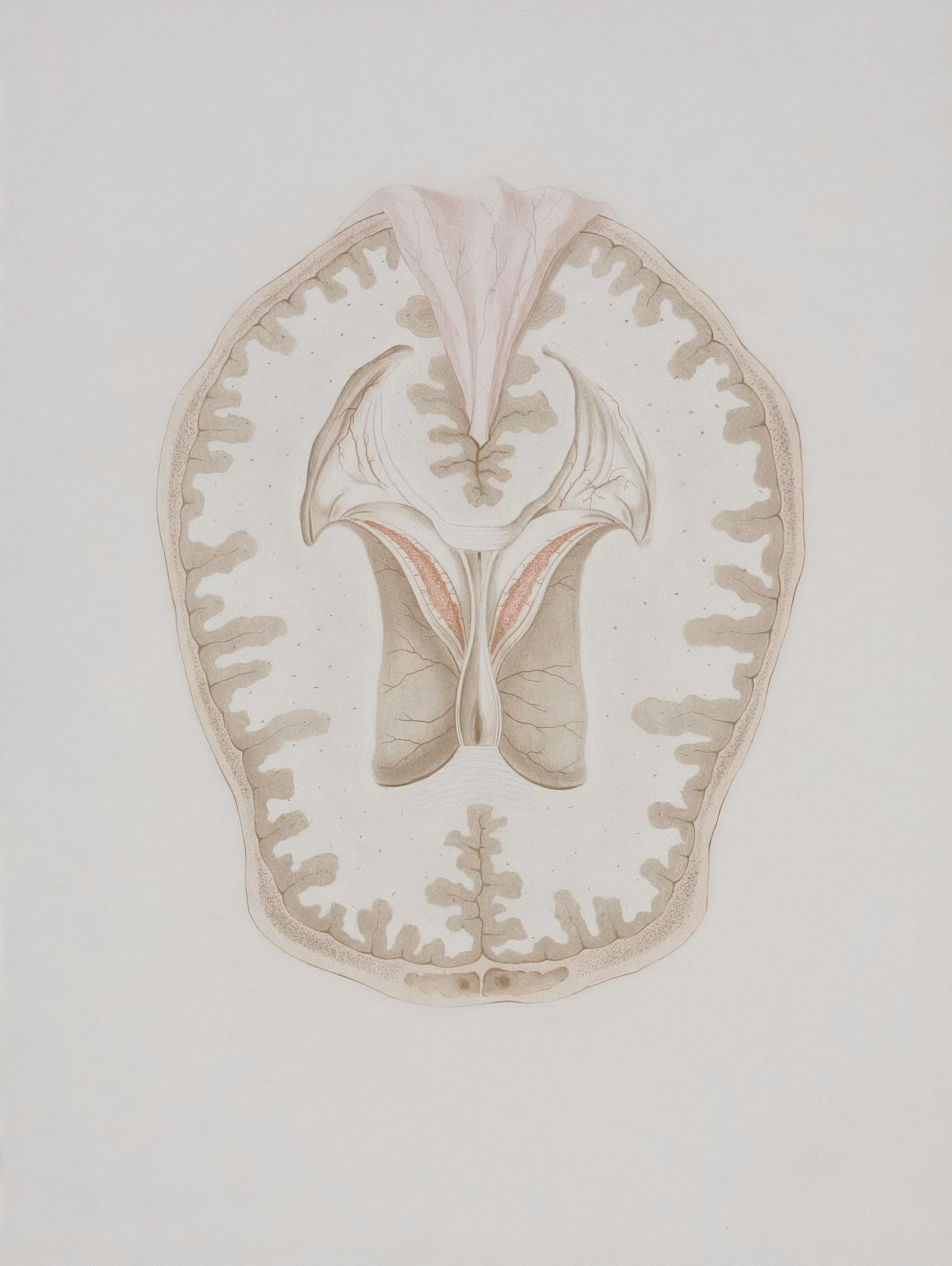
The Five Ages of the Human Brain: How Neural Architecture Changes Across a Lifetime
Here’s some new data. The human brain does not “grow,” it changes regimes.
It abandons one architectural logic and adopts another, the way empires shift capitals when the old city feels too cramped.
Neuroscientists now argue that the brain moves through five distinct epochs, each ushered in with its own quiet upheaval at ages 9, 32, 66, and 83.
These are not symbolic ages. They mark nothing ceremonial. No one receives a congratulatory card for entering their “modularization period.”
The skull does not vibrate to alert you. Yet the architecture shifts all the same—restructuring your inner life with the indifference of a city planning department updating zoning laws.
This is the brain’s real story: not ascent, not decline, but reorganization.
Published recently in Nature Communications, the research confirms something clinicians and parents have sensed intuitively: the brain is not a straight line. It’s a renovation schedule.

Do Dogs Have Autism? Neurodiversity in Our Pets—and What It Reveals About Us
Every house has one: the spaniel who blasts through the living room like a joyful meteor; the cat who regards your affection as performance art; the pug who collapses into dread at the sound of keys.
Humans, unable to resist organizing the world into familiar neuroses, reach instantly for the labels: “ADHD dog,” “autistic cat,” “anxiously attached pug.”
It’s affectionate shorthand.
But it’s also diagnostic cosplay.
And yet—and this is where things get uncomfortable—beneath the jokes and projection lies a quieter biological truth: some animals really do show neurobiological variations that echo human neurodivergence.
Not literally. Not diagnostically. But structurally, chemically, behaviorally.
So the real question isn’t “Can a dog be autistic?”
The real question is:
What happens when a mammalian nervous system doesn’t match the environment we put it in—and why are humans so desperate to name it?
The Seven Kinds of Rest You Need to Recover from Complex PTSD
Let’s talk about a new order. A clearer frame. A deeper excavation.
Trauma reorders perception. It alters the nervous system’s interpretation of reality. The facts remain the same, but the meaning is different.
The room is the same, but your body reads it differently. A trauma survivor walks into ordinary spaces and senses what others do not: threat in the tone, tension in the air, danger in the pause, reversal in the silence.
A thousand small signals, each carrying its own implication.
When rest becomes part of trauma recovery, it has to follow this altered architecture.
Not the mind first. Not the feelings first.
The order must match the way the nervous system actually experiences the world.
First the world.
Then the body.
Then the inner life.
Then the meaning.
This is how rest is restored.

Do Crushes Hurt Your Relationship? What the Science Actually Says
If you search “does having a crush mean my relationship is over,” you get a digital avalanche of panic.
Partners write as if noticing another human being automatically voids their mortgage.
But the question is worth asking because most couples have no idea what a crush inside a committed relationship actually means—or doesn’t mean.
A new study in the academic journal Personal Relationships by Lucia O’Sullivan and colleagues finally gives us data instead of hand-wringing.
The researchers followed real couples for a year to see whether crushes (or, in research language, extradyadic attraction) actually reduce relationship satisfaction, sexual satisfaction, or commitment.
Enmity Is the New American Pastime: Narcissism, Social Media, and the Pleasure of Personal Outrage
Some cultures perfect bread. Some perfect calligraphy.
America, in its eternal improvisational brilliance, has perfected enmity.
We manufacture it, distribute it, and export it globally like it’s a subsidized crop. Enmity is our artisanal sourdough—fermented, shared, photographed, and wildly overvalued.
The digital age merely gave us the industrial kitchen.
But to understand why half the country seems permanently on the brink of a personalized holy war, we have to begin not with the internet, but with the small, neglected psychological fact that people so often behave as if their self-worth depends on having an enemy.
Enmity offers direction. It offers meaning.
And in a lonely culture, it offers a kind of counterfeit intimacy—the connection of shared antagonism.
This is Cultural Narcissism’s latest trick, and it’s a good one.

Why Family-Oriented Women Trust Social Cues in Partner Choice
There are moments in a woman’s life when attraction is not a flutter but an audit.
She notices a man—his posture, his easy laugh, the way he performs charm as if it were a language he learned too quickly—and then she does something many men never see: she listens for the world’s opinion of him.
This is not insecurity.
It is the ancient logic of survival, the recognition that some mistakes cost more than others, and that romance—left unverified—can bankrupt a future.
A new study in Evolutionary Psychological Science embedded beside its name confirms the pattern: women who follow slower, more family-oriented life strategies rely more heavily on social information when judging potential partners.
In the language of evolutionary psychology, this is “mate choice copying.” In the language of women with something to lose, it is caution sharpened into intelligence.
Mate choice copying is not new; it’s older than agriculture, documented across species, including humans, in work such as Mate-choice copying in humans: adaptive utility embedded beside its title.
The principle is simple:
If other women found him desirable, he looks better. If other women fled, he looks like the reason they ran.
But this study asks the deeper question:
Who copies the most—and why?