Why Gratitude Matters More Than Support in Long-Term Love
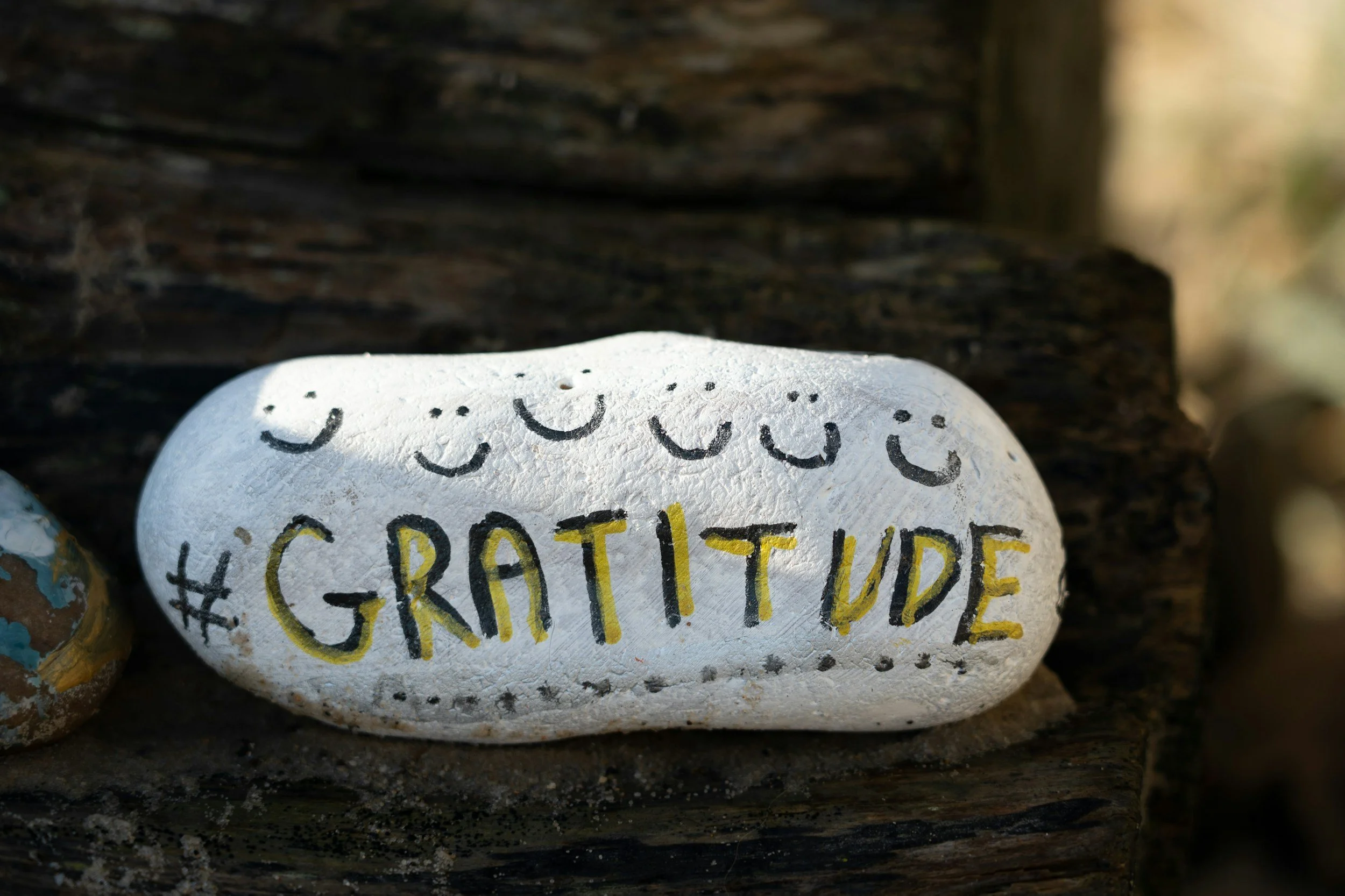
Friday, November 28, 2025. The importance of giving “atta-boys” and “atta-girls.” They matter, and this sequence is easy to master.
Long-term relationships run on many illusions, but the most cherished one is this: the belief that “supportive behavior” is inherently meaningful.
Americans love imagining that helping their partner through stress automatically strengthens the bond. It sounds so noble.
It flatters the helper. It looks terrific in wedding vows.
But according to recent research published in Frontiers in Psychology (Roth et al., 2023), your support does absolutely nothing for relationship satisfaction unless your partner:
bestows attention upon the act/ registers it/, feels grateful/, and—critically—/you pick up on that gratitude.
Without this specific sequence, supportive behavior is the relational equivalent of unpaid emotional overtime.
Nobody remembers it, and nobody feels better for having done it.
This finding is not romantic. But it is precise and accurate.
It is also the best news couples therapists had in years.
Because it finally exposes the one thing long-term couples do better than almost any other species: forgetting to appreciate the person standing three feet away doing half, or more, of the labor.
Does Support Actually Improve Relationship Satisfaction?
Not unless gratitude enters the room—and offers proof of life.
Roth and colleagues analyzed 163 long-term Swiss couples, many together for decades, and discovered that supportive behavior—dyadic coping, for the therapists keeping score—has almost no direct effect on relationship satisfaction. The statistical trace of support evaporates the moment gratitude enters the model.
It’s not that support is useless. It’s that support is psychologically meaningless until someone feels appreciated for it.
And once gratitude appears, the emotional dam bursts: satisfaction rises, resentment shrinks, and spouses suddenly stop fantasizing about separate apartments.
This finding lands like a splash of cold Alpine water on the face of older relationship research, which insisted—earnestly, sometimes desperately—that helping a partner carries its own intrinsic reward.
The “warm glow” literature (Andreoni, 1990) argued that giving feels good.
Bodenmann’s early dyadic coping studies framed support as inherently satisfying.
And much of marriage research throughout the ’90s treated help as a universal good, as if people naturally enjoy sacrificing themselves for their partners.
It’s a charming theory. Unfortunately, it’s ruthlessly bitch-slapped by this new data.
How This Study Challenges the Old Myths About Helping Your Partner
The warm-glow fantasy dissolves under Swiss-level statistical scrutiny.
For decades, scholars believed support improved marriages simply because humans delight in prosocial acts.
But Roth et al. reveal that without gratitude, supporting your partner is nothing more than the domestic version of volunteer labor.
You might enjoy feeling competent. You might congratulate yourself for being the “emotionally mature” one.
But your partner’s satisfaction won’t budge unless they feel grateful for the help—and you, in turn, notice their gratitude.
This is exactly what Algoe’s “find-remind-and-bind” theory of gratitude predicted years ago (Algoe, 2012): gratitude is what signals that a partner is valuable, responsive, and worth investing in. Support doesn’t do the binding; gratitude does.
Even John Gottman’s work on bids for connection aligns with this. A bid is answered not with help, but with recognition.
A spouse who turns toward you, betows attention upon you, appreciates you—that is what changes marriages over time, not heroic acts of emotional labor completed in a silent vacuum.
Which brings us to the real point: support only counts when it’s noticed.
Everything else is invisible labor, and long-term couples drown in invisible labor.
Why Gratitude Is the Emotional Currency That Keeps Long-Term Couples Stable
Support is the engine. Gratitude is the fuel. Without the fuel, the engine just makes noise.
To understand why gratitude is so powerful, you have to understand the economics of long-term relationships. Every shared stressor—illness, childcare, finicky in-laws—creates an imbalance. One partner works harder. The other benefits.
The only thing that restores equilibrium is bestowed attention and the subsequent appreciation.
This mirrors classic equity theory (Walster et al., 1978): partners feel satisfied when the give-and-take feels fair.
Not mathematically fair, but emotionally fair.
Gratitude is the relational ledger entry that says: I saw that. I value that. You matter.
Without gratitude, a marriage becomes an unpaid internship.
With gratitude, even minimal support feels meaningful.
Felt vs. Expressed Gratitude: Why Words Are Optional but Detection Is Mandatory
Long-term couples perform emotional mind-reading far more often than they admit.
One elegant finding in the Swiss study is that partners didn’t necessarily need explicit “thank-you”s for support to matter. I’d be unwilling to test that hypothesis in American culture. I’m a please and thank you kinda dude.
Felt gratitude—internal, quiet, sometimes invisible—had the same positive effect as spoken appreciation, as long as the partner perceived it.
This aligns with research on responsiveness and emotional attunement (Reis et al., 2010): couples in long-term relationships detect subtle shifts in warmth, tone, and expression. They register appreciation through sighs, softened shoulders, the way someone hands over a cup of coffee.
Their nervous systems sync more than they discuss.
But this also opens the door to disaster:
If one partner feels grateful but expresses nothing, the other may read that silence as indifference.
If one partner expects gratitude to be obvious but has never actually communicated it, misinterpretation sets in.
And as other gratitude researchers note (e.g., Lambert et al., 2010), gratitude accuracy is highly variable. Some partners are hypersensitive to appreciation; others are gratitude-deaf.
A marriage can collapse for the simplest reason: one person stopped noticing gratitude the other believed was “obvious.”
Gender Differences: Why Women Need Gratitude More—and Why Men Think They Don’t
Until they suddenly do.
The study found that the gratitude–satisfaction pathway was significantly stronger for women.
Women derived satisfaction from supporting their partner only when they sensed appreciation. This mirrors massive bodies of research on emotional labor (Hochschild, 1983), caregiving burnout (Impett et al., 2014), and maternal role overload.
In heterosexual relationships, women have spent decades being told their support is expected.
Gratitude is what tells them their support is valued.
Men, meanwhile, show a faint self-reward mechanism for helping (“Look at me, doing things”). But even this evaporates in the absence of appreciation. Their satisfaction increases meaningfully when gratitude is expressed or sensed.
The short version:
Women need gratitude to feel valued.
Men need it to feel effective.
Both need it to stay married.
How These Findings Compare Across Cultures, Ages, and Relationship Contexts
Gratitude is universal. The way it is expressed is not.
Roth’s sample was Swiss, educated, mostly married, and comfortably middle-class—a demographic that tends to value emotional stability over emotional expression.
It’s possible younger or more culturally expressive cohorts show stronger effects for verbal appreciation.
Couples in distress might have attenuated gratitude detection. Highly neurodiverse couples may show different gratitude-sensing patterns altogether, especially if subtle cues are harder to read.
But across studies—from Algoe’s gratitude experiments to Impett’s caregiving research—the conclusion is stubbornly consistent: gratitude mediates the relationship between helping and happiness across almost every cultural context where it has been studied.
Some couples need expressive gratitude. Some rely on quiet signals. Some expect gratitude to arrive telepathically. But none thrive without it.
What Couples Therapists Should Take Away: Appreciation Is a Clinical Intervention
Support is the behavior. Gratitude is the meaning.
Therapists focus heavily on communication, conflict resolution, and emotional regulation.
Necessary, yes. But insufficient.
The Swiss study suggests that one of the most clinically meaningful interventions is helping partners notice and decode gratitude.
Helping means nothing without receiving. Receiving means nothing without gratitude. And gratitude means nothing if it doesn’t land on the partner who did the work.
Therapy that strengthens the gratitude loop strengthens the relationship.
FAQ: Gratitude, Support, and Long-Term Relationship Satisfaction
Does gratitude actually improve relationship satisfaction?
Yes. Across multiple studies, gratitude acts as the mechanism connecting support to satisfaction. Without gratitude, supportive behavior does not reliably increase happiness.
Why doesn’t support automatically make couples feel closer?
Because support is an input, not an outcome. Gratitude is the emotional bridge that turns effort into meaning.
Can long-term partners sense gratitude without words?
Often, yes. But accuracy varies widely, and misinterpretation is common—especially under stress, exhaustion, or longstanding resentment.
Does gender affect how gratitude works in relationships?
Yes. Women’s satisfaction is more dependent on feeling appreciated. Men benefit from gratitude too, but they derive a small satisfaction bump simply from helping.
Is gratitude more important in neurodiverse relationships?
In many cases, yes. Subtle cues can be harder to detect, making explicit gratitude a stabilizing force when nonverbal signals fail.
Final Thoughts
Gratitude is not decorative. It’s structural.
Without it, supportive behavior becomes invisible, unrewarded, and eventually resented.
With it, even modest kindnesses feel meaningful. Long-term relationships are not sustained by grand gestures but by the quiet daily exchange of appreciation.
Support is admirable.
But gratitude is transformative.
And relationships—every single one—run on the difference.
Be Well, Stay Kind, and Godspeed.
REFERENCES:
Algoe, S. B. (2012). Find, remind, and bind: The functions of gratitude in everyday relationships. Social and Personality Psychology Compass, 6(6), 455–469. https://doi.org/10.1111/j.1751-9004.2012.00439.x
Andreoni, J. (1990). Impure altruism and donations to public goods: A theory of warm-glow giving. The Economic Journal, 100(401), 464–477. https://doi.org/10.2307/2233449
Hochschild, A. R. (1983). The managed heart: Commercialization of human feeling. University of California Press.
Impett, E. A., Gordon, A. M., Kogan, A., Oveis, C., & Keltner, D. (2014). How sacrifices affect the givers and their partners: Insights from approach–avoidance motivational theory. Journal of Personality and Social Psychology, 106(3), 418–435. https://doi.org/10.1037/a0034135
Lambert, N. M., Fincham, F. D., & Graham, S. M. (2010). Feeling grateful to a partner increases romantic relationship commitment. Journal of Personality and Social Psychology, 98(2), 280–291. https://doi.org/10.1037/a0017916
Reis, H. T., Clark, M. S., & Holmes, J. G. (2010). Perceived partner responsiveness as an organizing construct in the study of intimacy and closeness. Handbook of Closeness and Intimacy, 201–225.
Roth, M., Good, N., Ledermann, T., Landolt, S. A., Weitkamp, K., & Bodenmann, G. (2023). Building happier bonds: Gratitude as a mediator between dyadic coping and relationship satisfaction in romantic couples. Frontiers in Psychology, 14, 1243214. https://doi.org/10.3389/fpsyg.2023.1243214
Walster, E., Walster, G. W., & Berscheid, E. (1978). Equity: Theory and research. Allyn & Bacon.