The Long Shadow of Faith: How a Religious Upbringing Shapes Mental and Cognitive Health
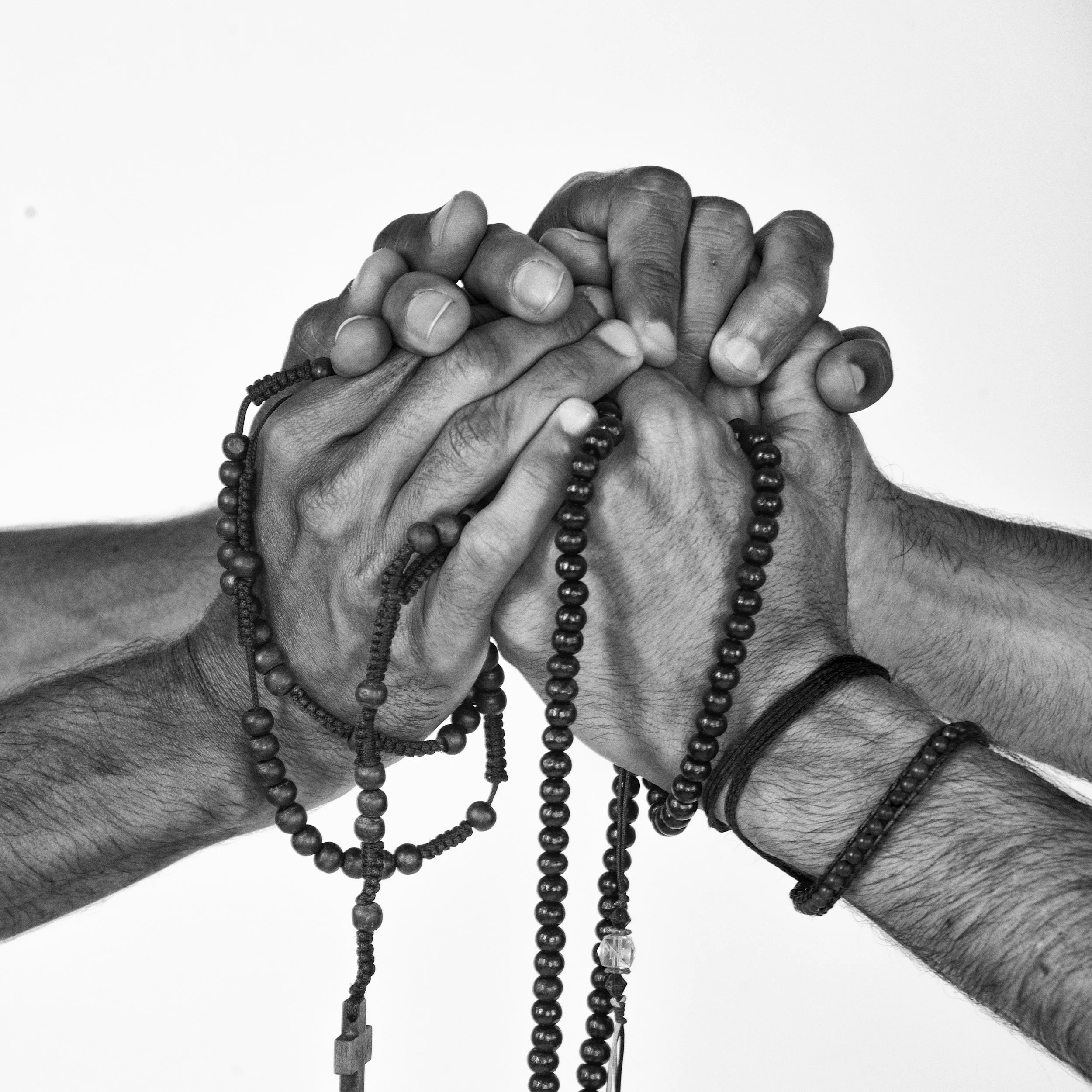
Monday, October 27, 2025. This is for Sheila in NYC.
It’s a peculiar thing, isn’t it? The very institutions that once promised salvation might, decades later, leave traces in our blood pressure and brain fog.
A new study in Social Science & Medicine claims that a religious upbringing in childhood is linked—albeit faintly—to poorer mental and cognitive health in later life.
The finding lands like a theological Rorschach test: believers see an attack on virtue; atheists see vindication.
But for anyone who grew up singing hymns with one hand and nursing anxiety with the other, it feels more like déjà vu.
What the Research Actually Found
The researchers don’t argue that religion ruins you—only that the story is more complicated than the Sunday sermon suggested.
Using a massive European dataset and a machine learning model called a “causal forest” (a name that sounds like a place Dante might have gotten lost in), they explored how early religious education shapes well-being after age fifty.
I’ve blogged about The Survey of Health, Aging, and Retirement in Europe (SHARE) previously, and, most likely, I will continue to do so. It is an impressive dataset—large, cross-national, and well-respected.
But the study relied on a single question: “Were you religiously educated by your parents?” That’s a little like asking, “Did you go to school?” and then inferring whether you enjoyed algebra.
Childhood religiosity isn’t a monolith. Not even fucking close.
A Lutheran upbringing in Finland bears little resemblance to an Irish Catholic childhood in South Boston, or an Orthodox Christian one in Greece. The phrase “religiously educated” compresses a world of nuance into a reductive yes or no—and our understanding of mental health suffers for it.
It is, as a stand-alone question, inherently ridiculous.
Context, as always, is essential.
Faith’s Double-Edged Effects on Mind and Body
The results revealed something curious: those who grew up religious tended to have better physical health but slightly worse mental and cognitive health.
Faith, it seems, may steady the body while somewhat complicating the mind.
Religion’s proscriptive habits—no drinking, no smoking, plenty of structure—often produce healthier lifestyles.
But those same systems can constrict emotion, sexual expression, and critical thought—fertile ground for later-life depression (Koenig, 2018).
This doesn’t mean belief erodes intellect.
More likely, it reflects historical inequities, when religious devotion was intertwined with limited educational access, especially for women and the poor (Norris & Inglehart, 2011). The way I understand this is that our bodies thrives under order; while our souls resents confinement.
When Faith and Patriarchy Collide
The study’s gender and class patterns feel hauntingly familiar to clinicians.
For many women raised in rigid faith traditions, self-sacrifice was virtue’s currency. Deference was safety.
As Carol Gilligan (1982) observed, such moral systems can produce empathy at the cost of autonomy. When faith merges with patriarchy, guilt and goodness become indistinguishable. Religion, in that light, isn’t exactly the wound—but occasionally it’s the instrument that delivered it.
How Religious Upbringing Manifests in Therapy
These legacies don’t walk into therapy quoting scripture; they arrive disguised as tonality.
A tight chest when a client says “selfish.” A hesitant laugh before expressing anger.
The belief that love must be earned through suffering. These are the fingerprints of early religious training—what anthropologist Mary Douglas (1966) called the “moral architecture” of purity and pollution, the earliest blueprint of right and wrong.
My client Sheila comes to mind: a woman who grew up in a closed, apocalyptic sect where every doubt was considered sin.
She spent her twenties deprogramming, her thirties studying counseling and mental health, and now, in her fifties, she’s become a seasoned therapist.
“It’s strange,” she told me, “to realize I left a cult only to build a career in listening.”
Her story isn’t rare—it’s a testament to how our survival of childhood trauma often shapes our vocation, and how meaning can be eventually recycled into empathy. Her story is similar to my own, and we did good work together.
Cognitive Schemas and the Lingering Logic of Faith
Clinicians recognize these patterns as cognitive schemas—deeply learned maps of worth and belonging (Young et al., 2003). A child taught that questioning authority equals moral failure often grows into an adult who equates doubt with danger.
Yet many carry the gifts of faith too: discipline, compassion, endurance.
Therapy isn’t about extracting the religion—it’s about cleansing it of shame. As my client Sheila once explained, “I still pray, but now it feels like breathing, not begging.”
The Emerging Science of Religious Trauma
The growing literature on moral injury and religious trauma (Winell, 2011; Currier et al., 2019) reframes faith-based harm in psychological terms.
The injury isn’t always the belief itself—it’s the betrayal of spiritual authority.
When a child’s sense of safety is violated by those claiming divine sanction, the result resembles trauma, though its wounds are moral, not medical.
These clients don’t just want to feel better; they want to reconcile what they were told was sacred as a child with what they’ve learned was unjust as an adult.
Reclaiming the Sacred in Therapy
Healing often begins with reclaiming spirituality from the institutions that monopolized it. The work is to separate the sacred from the shaming, the transcendent from the punitive. In this way, therapy becomes a kind of secular sacrament—confession without condemnation, grace without hierarchy.
The Cultural Cost of Secularism
There’s another layer to this story: cultural stigma around faith.
In much of Europe and the secularizing West, being openly devout can invite ridicule. When older adults rate their health as “poor,” they may not be describing illness but a sense of alienation—from a society that no longer speaks their moral language.
Sociologist Grace Davie (2015) called this “believing without belonging”—private faith lived in public silence. That invisibility can resemble depression, not because belief failed, but because culture turned faith into a social liability.
What the Study Really Means
For all its statistical complexity, the study asks an ancient question in a new dialect: Does what we believe about the divine shape our long-term health?
The answer appears to be yes—but only in the way family, culture, and conscience always have.
Religion magnifies the home it’s housed in. In warm families, it teaches meaning; in cold ones, it teaches fear.
It’s not the hymns that wound—it’s how they were sung.
Therapy as the New Sanctuary
If therapy has inherited our American cultural spiritual mantle, it’s because it offers what many faiths once did: confession, reflection, forgiveness.
When people leave religion, they rarely stop searching for meaning—they simply look for it in kinder, more approachable architecture. Therapy gives that search a new vocabulary—rooted in empathy rather than dogma, and insightful, safe inquiry, rather than blind obedience.
The task isn’t to replace religion with reason, but to expand the space where both might respectfully coexist.
The sacred need not vanish—it only needs better boundaries. Healing, after all, has always been a dialogue between belief and becoming.
Be Well, Stay Kind, and Godspeed.
REFERENCES
Currier, J. M., McDermott, R. C., Farnsworth, J. K., & Oliver, L. W. (2019). Moral injury and spiritual struggles in military veterans: A latent profile analysis. Journal of Traumatic Stress, 32(2), 293–303.
Davie, G. (2015). Religion in Britain: A Persistent Paradox. Wiley-Blackwell.
Douglas, M. (1966). Purity and Danger: An Analysis of Concepts of Pollution and Taboo. Routledge.
Gilligan, C. (1982). In a Different Voice: Psychological Theory and Women’s Development. Harvard University Press.
Koenig, H. G. (2018). Religion and mental health: Research and clinical applications. Academic Press.
Norris, P., & Inglehart, R. (2011). Sacred and Secular: Religion and Politics Worldwide. Cambridge University Press.
Winell, M. (2011). Leaving the Fold: A Guide for Former Fundamentalists and Others Leaving Their Religion.Apocryphile Press.
Young, JE., Klosko, J. S., & Weishaar, M. E. (2003). Schema Therapy: A Practitioner’s Guide. Guilford Press.