

Welcome to my Blog
Thank you for stopping by. This space is where I share research, reflections, and practical tools drawn from my experience as a marriage and family therapist.
Are you a couple looking for clarity? A professional curious about the science of relationships? Or simply someone interested in how love and resilience work? I’m glad you’ve found your way here. I can help with that.
Each post is written with one goal in mind: to help you better understand yourself, your partner, and the hidden dynamics that shape human connection.
Grab a coffee (or a notebook), explore what speaks to you, and take what’s useful back into your life and relationships. And if a post sparks a question, or makes you realize you could use more support, I’d love to hear from you.
Be Well, Stay Kind, and Godspeed.
~Daniel
P.S.
Feel free to explore the categories below to find past blog posts on the topics that matter most to you. If you’re curious about attachment, navigating conflict, or strengthening intimacy, these archives are a great way to dive deeper into the research and insights that I’ve been sharing for years.
- Attachment Issues
- Coronavirus
- Couples Therapy
- Extramarital Affairs
- Family Life and Parenting
- How to Fight Fair
- Inlaws and Extended Families
- Intercultural Relationships
- Marriage and Mental Health
- Married Life & Intimate Relationships
- Neurodiverse Couples
- Separation & Divorce
- Signs of Trouble
- Social Media and Relationships
- What Happy Couples Know

The Petty Grudges That Save Relationships
Every couple has a shared mythology. For some, it’s romantic: the enchanted vacation where everything worked, the tiny first apartment with the terrible heating, the proposal at sunrise.
For others—let’s be honest here—it’s pettier.
Much pettier.
The fork incident of 2017.
The Great Dishwasher Mutiny of last October.
The One Time You Said “Do Whatever You Want” In That Tone That Almost Ended the Republic.
These moments linger not because they matter, but because they didn’t—and yet somehow became emotionally significant anyway.
Here’s the secret few therapists say out loud:
petty grudges keep many relationships alive.
Big conflicts may define a chapter of your marriage, but petty grudges define its texture—and texture is what couples return to years later, laughing, grimacing, or reenacting with strangely theatrical precision.
These small irritations aren’t immaturity.
They’re intimacy in miniature.

The Weather Systems of a Mixed-Neurotype Marriage
Mixed-neurotype couples often arrive in therapy with the same expression: the polite but vaguely startled look of people who have survived a long winter indoors without central heat.
Not traumatized. Not defeated. Just… cold. A little worn down.
A little bewildered at how two intelligent adults, armed with modern conveniences and a shared mortgage, can still feel this tired.
This is the quiet signature of neurodiverse relationship burnout—a particular sort of relational fatigue that’s less dramatic than despair and more persistent than everyday stress. It doesn’t crash into you. It accumulates. Like weather.
And with weather, the story is never the storm. It’s the atmosphere.
So let’s begin with Anna and Marcus.
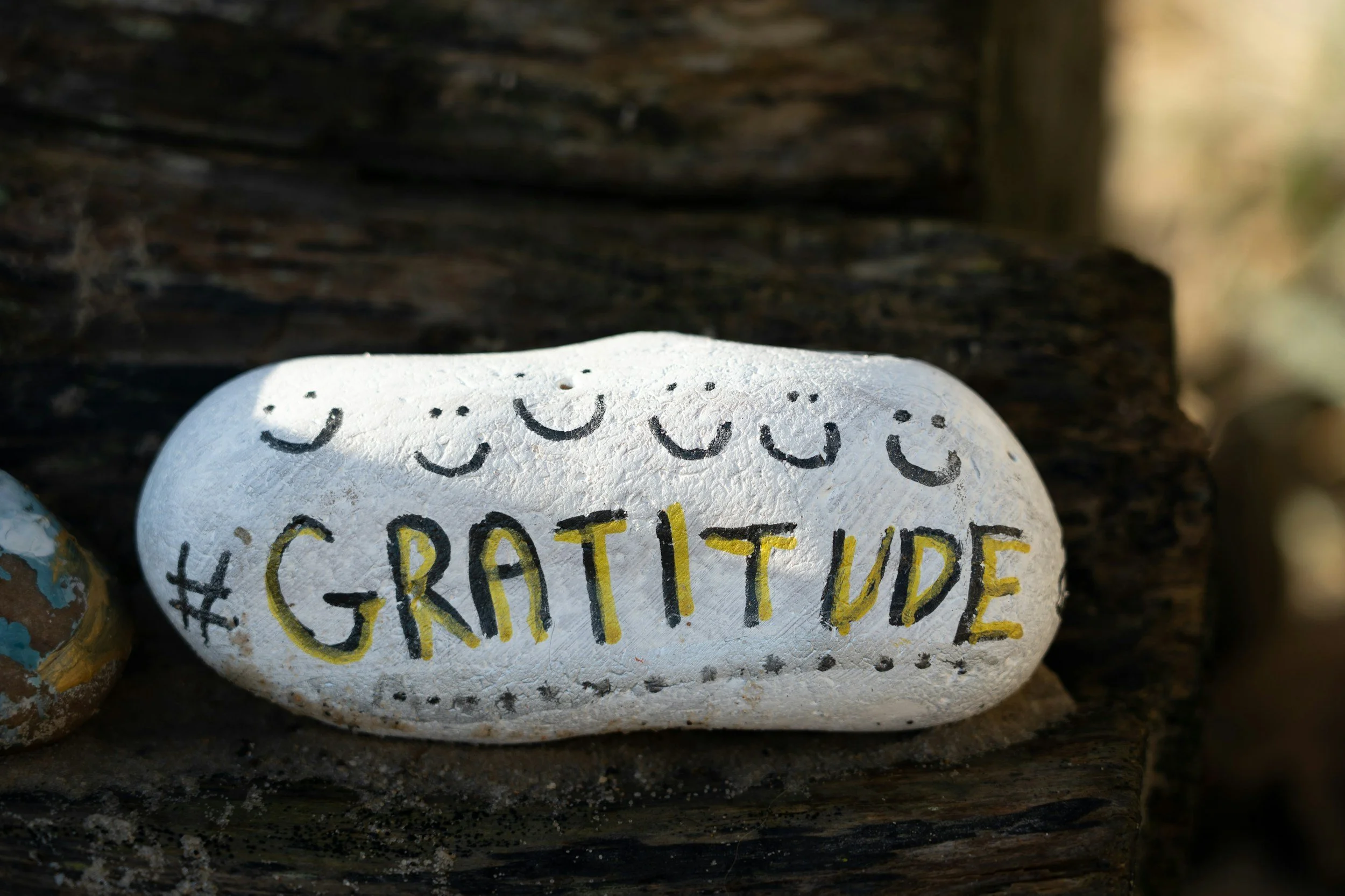
Why Gratitude Matters More Than Support in Long-Term Love
Long-term relationships run on many illusions, but the most cherished one is this: the belief that “supportive behavior” is inherently meaningful.
Americans love imagining that helping their partner through stress automatically strengthens the bond. It sounds so noble.
It flatters the helper. It looks terrific in wedding vows.
But according to recent research published in Frontiers in Psychology (Roth et al., 2023), your support does absolutely nothing for relationship satisfaction unless your partner bestows attention, registers it, feels grateful, and—critically—you pick up on that gratitude.
Without this specific sequence, supportive behavior is the relational equivalent of unpaid emotional overtime.
Nobody remembers it, and nobody feels better for having done it.
This finding is not romantic. But it is precise and accurate.
It is also the best news couples therapists had in years.
Because it finally exposes the one thing long-term couples do better than almost any other species: forgetting to appreciate the person standing three feet away doing half, or more, of the labor.

The Complete Guide to Living With a Highly Sensitive Spouse
You don’t marry a highly sensitive spouse.
You slowly come to understand that your partner is running a more advanced operating system than anything you’ve ever owned, and frankly, you’re not sure you would’ve passed the compatibility test if someone had administered it beforehand.
At first, it’s charming.
Your spouse notices things.
How thoughtful.
They point out the tension between your two friends at dinner.
They say that your mother “seemed off.”
They pick up on “an undertone” you absolutely did not hear—largely because you were focused on buttering a roll.
But then one day you realize they’re not overreacting; they’re over-perceiving.
And it’s not mystical, either—it’s rooted in what we know from the foundational research on sensory processing sensitivity as a temperament trait, described in Elaine Aron’s original work in Journal of Personality and Social Psychology.
Highly sensitive spouses aren’t fragile.
They’re observant to the point of being haunted.
And living with someone who notices everything—especially the things you’d prefer went unnoted—is an intimate education in how much of your life you assumed was occurring off-camera.

Why Science-Based Couples Therapy Matters: The Dark History of Marriage Counseling
Folks sometimes ask me why science-based couples therapy is important.
They ask it casually, the way you might ask whether you really need car insurance or whether the smoke alarm is just being dramatic.
Let me be as clear as mid-century America was not:
Because the field began as a polite, televised disaster.
The 1950s were not the golden age of marriage; they were the golden age of men with clipboards and no credentials issuing decrees about women’s lives.
It was a decade that successfully turned gender ideology into therapeutic doctrine—an impressive feat, if you ignore the human cost.
To understand why evidence matters, you have to see what filled the vacuum before evidence existed.

Why Couples Fight in December: The Emotional Math of Holiday Stress
December arrives with such theatrical promise—lights twinkling, cookies cooling, the cultural insistence that this month be “magical”—that it’s almost unfair how quickly it exposes the cracks in a relationship.
Couples don’t plan to fight in December. Really they don’t.
They just sorta drift into it the way people wander into snowstorms they should have seen coming.
If November is the month you pretend everything’s fine over turkey, December is the month the emotional bookkeeping comes due.
And couples do fight. A lot.
Not because something is wrong with them individually, but because something peculiar happens collectively: December elevates their expectations and depletes their capacities at the exact same time.
It’s the only month where joy has a deadline. Yikes.

Mismatched Drinking Habits: The Thanksgiving Problem No One Wants to Talk About
If you want to understand a marriage, don’t watch how the couple behaves on a random Tuesday. Watch them on Thanksgiving.
Watch who opens the wine at 2:30 p.m. “just to breathe.”
Watch who side-eyes the bottle of Chardonnay that seems to be evaporating.
Watch who volunteers to “check the turkey” every fifteen minutes because the basement freezer happens to contain a bottle of vodka no one else remembers buying.
Thanksgiving is the annual stress test of the American relationship.
Family arrives. Expectations bloom. Childhood ghosts reappear with uncanny punctuality.
And alcohol—always the agreeable resident of the holiday table—slides in to help smooth the proceedings, inflate them, or detonate them, depending on the marriage.
According to a comprehensive review in Substance Abuse and Rehabilitation, what determines whether a couple will survive not only Thanksgiving but the ordinary grind of a shared life isn’t simply who drinks more. It’s whether they drink in sync.
Researchers call this the drinking partnership.

The Emotional Double Bind in Marriage: How Couples Get Trapped—and How to Break Free
There is a moment in a troubled marriage when the arguments stop having edges and start having consequences.
Not the dramatic kind—no slammed doors or clever insults—but the quieter, more existential kind where every gesture feels charged and every decision feels like the wrong one.
This is the emotional double bind: the relational configuration where every available choice injures something essential, and both partners begin to realize—silently, resentfully—that they are trapped inside a psychological geometry not of their making.
A double bind is not the same as a fight.
Fights have content.
Double binds have architecture instead.

Emotional Gridlock in Marriage: Why Couples Get Stuck and How to Break Free
There comes a point in many marriages when the noise stops but the suffering doesn’t.
The shouting fades, the arguments flatten, and the couple begins to live together like two exhausted nations engaged in a negotiated ceasefire—no longer fighting, but no closer to peace.
This is Emotional Gridlock: the quiet catastrophe of a relationship that can’t move forward, can’t move back, and can’t bear to stay where it is.
Gridlock is not about dishes, or tone, or who asked more generously last week.
Those are merely the costumes worn by a more existential drama.
Gridlock is what happens when the marriage loses its shared emotional language but continues speaking anyway, like two translators arguing over a text neither of them has read.
It is the stalemate between meaning and fear.

Situationship Amnesia: Why We Miss Folks Who Weren’t Good for Us
There is a particular kind of forgetting that happens only in the aftermath of an almost-relationship.
It is not graceful, and it is not poetic.
It is the kind of forgetting, for some, that feels like a survival strategy invented by someone who has never actually survived anything.
This is Situationship Amnesia—the neurological blackout that convinces you the person who barely showed up for you might, under slightly improved astrological conditions, be the great love of your life.

The Emotional Epochs of a Neurodiverse Marriage
There are marriages that move gradually, like weather systems drifting across a landscape.
And then there are neurodiverse marriages—marriages that move in epochs, where each era has its own climate, its own logic, its own form of truth. These marriages don’t simply “grow” or “change.”
They enter distinct emotional eras shaped by the dynamic interplay of two differently wired nervous systems.
Where neurotypical couples talk about communication patterns, neurodiverse couples live inside neurobiological time zones.
Their conflicts often seem to arrive from different centuries. One partner floods; the other disappears. One interprets patterns; the other follows precision. One senses danger; the other senses noise.
Both believe they’re making sense—because within their own nervous systems, they are.

Emotional Austerity: When Your Partner Puts a Velvet Rope Around Their Inner World
Emotional austerity happens when emotional availability, responsiveness, and warmth get rationed in a relationship.
Here’s how it begins, how to recognize it, and what neuroscience and attachment research reveal about getting out of the scarcity cycle.
You never catch emotional austerity early. No one does.
If people were skilled at noticing emotional shifts on time, couples therapy would be a charming niche job performed out of a converted garden shed. Instead, emotional austerity arrives the way most relationship trouble arrives: quietly, politely, and entirely off the books.
It doesn’t start with a crisis. It starts with a shrug.
You ask how their day was and they offer a single syllable that conveys absolutely nothing. You share something meaningful and get a nod so faint it should be checked for a pulse.